
Mechanical equipment/parts will experience brittle cracking below the ultimate strength of the material under the combined action of tensile stress and corrosive media, leading to equipment and part failure. This phenomenon is called stress corrosion cracking (SCC).
What Causes Stress Corrosion Cracking?
Stress corrosion cracking is different from cracking caused by simple stress, as it can also occur under very low load stress; It is also different from simple corrosion, as even weakly corrosive media can cause stress corrosion cracking. Stress corrosion cracking is a “insidious” form of corrosion that results in a significant decrease in mechanical strength, but with minimal metal loss. The damage is not obvious enough to be easily detected by accidental inspection, and stress corrosion cracking can trigger mechanical rapid fracture and even catastrophic failure of components and structures. Stress corrosion cracking usually has no signs of deformation, and the phenomenon of corrosion is not obvious. Therefore, it is a highly hazardous and highly concealed form of corrosion failure.
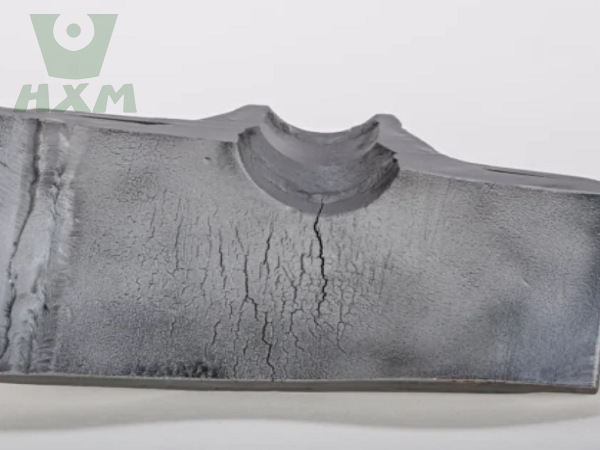
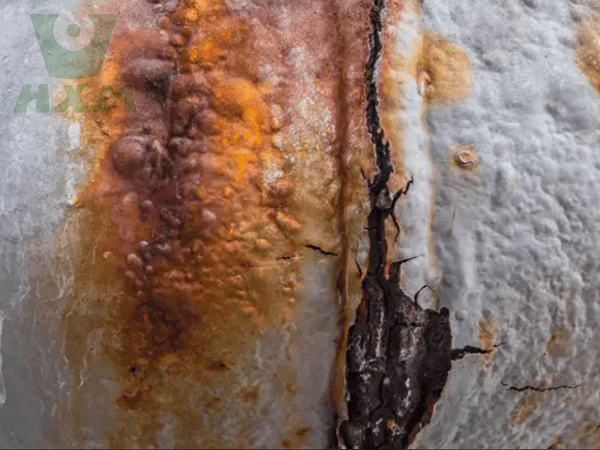
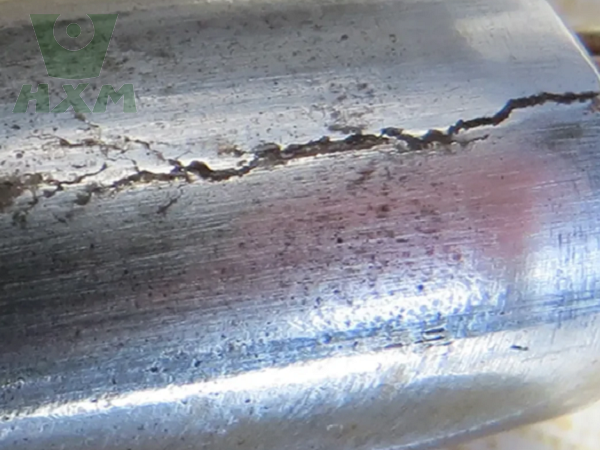
Sensitive materials.
As the saying goes, flies do not bite seamless eggs. In order for stress corrosion cracking to occur, sensitive materials are first required. The sensitivity of materials reminds us that in some working environments where stress corrosion cracking may occur, material selection should be cautious. Stress corrosion cracking is a particularly important issue to be aware of when austenitic stainless steels such as 304 are in service in environments containing chlorine. Austenitic stainless steel is a face centered cubic metal, which is particularly prone to stress corrosion cracking due to its crystal structure.
An environment that is prone to stress corrosion cracking.
Even if the material is sensitive, the medium that does not cause stress corrosion cracking will not undergo stress corrosion cracking, just like the A/B sides of a coin. The environmental medium is also an important condition for stress corrosion cracking.
Sufficient tensile stress.
It is generally believed that static tensile stress is a necessary condition for stress corrosion cracking. Someone may ask, what about alternating loads? I think it may be attributed to corrosion fatigue. Why is sufficient static tensile stress required for stress corrosion cracking to occur? Because it needs to meet the critical stress intensity factor KISCC under corrosive conditions.
How to prevent Stress Corrosion Cracking (SCC)?
Stress Corrosion Cracking (SCC) is a dangerous failure mechanism that occurs when a material is exposed to tensile stress + corrosive environment + susceptible material. To prevent SCC, follow these key strategies:
1. Material Selection
Choose SCC-resistant alloys (e.g., duplex stainless steels, nickel alloys like Inconel 625, or titanium alloys).
Avoid susceptible materials (e.g., austenitic stainless steels in chloride-rich environments).
Use low-carbon grades (e.g., 316L instead of 316 stainless steel).
2. Reduce Applied & Residual Stresses
Optimize design to minimize stress concentrations (e.g., smooth transitions, avoid sharp corners).
Apply stress-relief annealing to remove residual stresses from welding/cold working.
Use compressive surface treatments (e.g., shot peening, laser shock peening)
3. Control the Corrosive Environment
Reduce temperature (SCC risk increases with heat).
Control chemical exposure (e.g., limit chlorides, acids, or caustics).
Use inhibitors or coatings (e.g., corrosion-resistant paints, cathodic protection).
Preventing SCC requires a combination of material selection, stress management, environmental control, and proactive maintenance. By implementing these strategies, industries can extend component lifespan, reduce failures, and improve safety.
🔎 For SCC-resistant materials (Incoloy, Hastelloy ), contact us today!