
Have you ever wondered why some stainless steel products attract magnets while others don’t? Whether you’re selecting kitchen appliances, designing architectural elements, or sourcing industrial equipment, understanding the magnetic properties of stainless steel is crucial. In this comprehensive guide, we’ll explore the science behind stainless steel magnetism, its practical implications, and how to choose the right type for your needs.
Why Does Magnetism Matter in Stainless Steel?
Stainless steel is renowned for its corrosion resistance, durability, and aesthetic appeal. However, its magnetic behavior can significantly impact its application. For instance:
- Kitchen appliances: Magnetic stainless steel allows for decorative magnets and compatibility with induction cooktops.
- Medical and food processing: Non-magnetic varieties are often required to avoid interference with sensitive equipment.
- Construction and manufacturing: Magnetic properties affect weldability, formability, and performance in specific environments.
Understanding these properties ensures you make informed decisions, maximizing functionality and value.
We have a large amount of high-quality alloy inventory ready for shipment, please request a quote immediately.
The Science Behind Stainless Steel Magnetism
Stainless steel is a ubiquitous material in our daily lives, found in everything from kitchen appliances and medical instruments to architectural structures and industrial machinery. Renowned for its exceptional corrosion resistance, durability, and aesthetic appeal, stainless steel often raises a curious question: Is it magnetic? The answer, surprisingly, is not a simple yes or no. It’s a nuanced topic that delves into the fascinating world of metallurgy, crystal structures, and elemental compositions. Welcome to contact us and consult the more details about stainless steel.
Stainless steel is an alloy primarily composed of iron, chromium, and other elements like nickel, molybdenum, and carbon. Its magnetic properties depend on its microstructural phase, which is determined by the alloy composition:
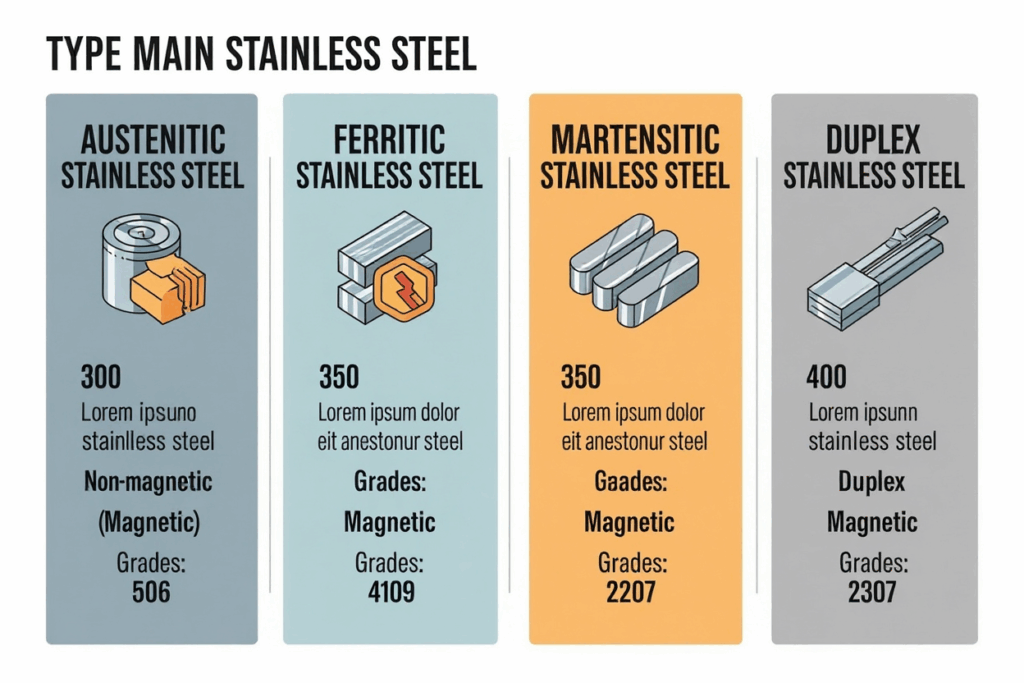
Four Types of Stainless Steel Magnetism
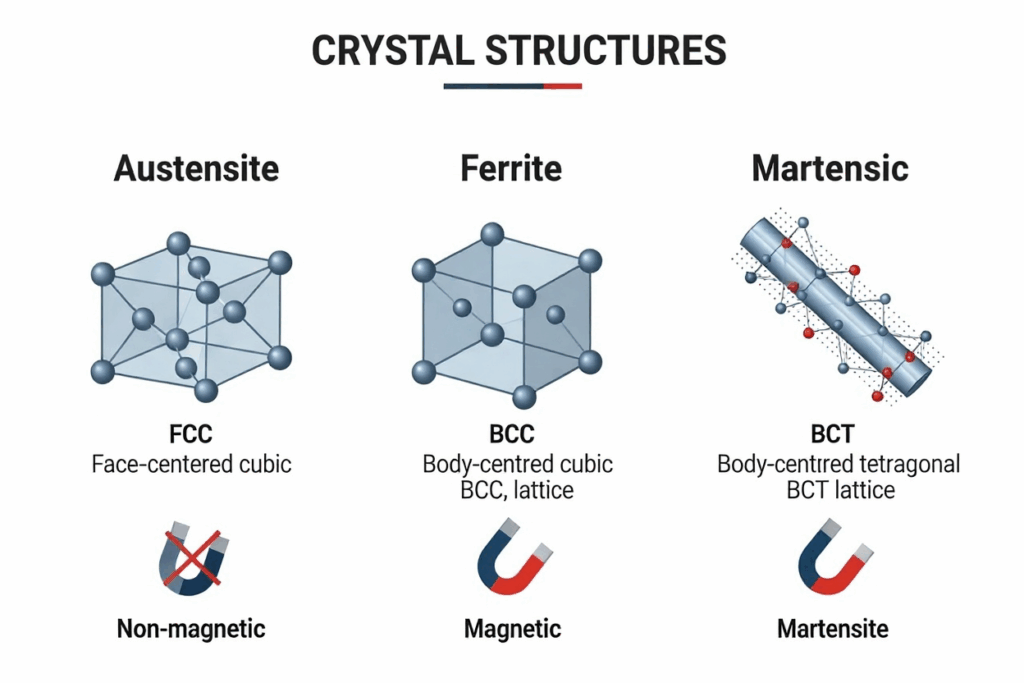
1. Ferritic Stainless Steels (e.g., 409, 430)
- Structure: Body-centered cubic (BCC) crystal lattice.
- Magnetic Behavior: Strongly magnetic.
- Common Uses: Automotive exhaust systems, kitchen sinks, decorative trim.
2. Martensitic Stainless Steels (e.g., 410, 420)
- Structure: Body-centered tetragonal (BCT) crystal lattice.
- Magnetic Behavior: Strongly magnetic.
- Common Uses: Cutlery, tools, valves, and bearings.
3. Austenitic Stainless Steels (e.g., 304, 316)
- Structure: Face-centered cubic (FCC) crystal lattice.
- Magnetic Behavior: Generally non-magnetic, but may become slightly magnetic after cold working.
- Common Uses: Kitchen appliances, chemical processing equipment, medical devices.
4. Duplex Stainless Steels (e.g., 2205)
- Structure: Mixed austenitic and ferritic phases.
- Magnetic Behavior: Moderately magnetic due to ferritic content.
- Common Uses: Oil and gas pipelines, marine applications.
Factors Influencing Magnetism in Stainless Steel
The question “Is stainless steel magnetic?” reveals a fascinating complexity within materials science. As we’ve explored, the answer is not a simple yes or no, but rather a nuanced explanation rooted in the material’s chemical composition, crystal structure, and processing methods. Austenitic stainless steels are generally non-magnetic, while ferritic, martensitic, and duplex stainless steels are magnetic. Furthermore, external factors like cold working can induce magnetism in otherwise non-magnetic grades.Our company have a large amount of high-quality alloy inventory ready for shipment, please request a quote immediately.
- Crystal Structure: The arrangement of atoms within the steel (FCC, BCC, BCT) is the most critical determinant of its magnetic behavior. Ferromagnetic materials have crystal structures that allow for the alignment of magnetic domains.
- Cold Working (Work Hardening): Mechanical deformation, such as bending, drawing, or forming, can induce a phase transformation in austenitic stainless steels, converting some of the non-magnetic austenite into magnetic martensite. This is a common reason why seemingly non-magnetic stainless steel items might exhibit a slight magnetic pull.
- Heat Treatment: The heat treatment process can alter the microstructure of stainless steel, thereby affecting its magnetic properties. For example, annealing can restore the non-magnetic properties of cold-worked austenitic stainless steel by reverting martensite back to austenite.
- Temperature: While less common in everyday applications, extreme temperatures can also influence the magnetic properties of stainless steel. For instance, some magnetic stainless steels may lose their magnetism above their Curie temperature.
Stainless Steel Types and Their Magnetic Characteristics
| Stainless Steel Grade | Type | Magnetic? | Primary Use Case |
|---|---|---|---|
| 304 / 304L | Austenitic | Typically No † | General corrosion resistance, tanks, hardware |
| 316 / 316L | Austenitic | Typically No † | Superior corrosion resistance, marine, chemical |
| 430 | Ferritic | Yes | Appliances, automotive trim, low-cost alternative |
| 410 | Martensitic | Yes | Cutlery, pumps, valves, high-strength parts |
| 2205 | Duplex | Partially | High-strength, corrosive environments (O&G) |
At Huaxiao Metal Supplier, we specialize in providing high-quality stainless steel solutions tailored to your specific needs. Our extensive inventory includes a wide range of austenitic, ferritic, martensitic, and duplex stainless steels, each meticulously tested to meet stringent industry standards. We understand that every application is unique, and our team of experts is dedicated to guiding you through the selection process, ensuring you choose the material with the precise magnetic and mechanical properties required for your success. We have a large amount of high-quality alloy inventory ready for shipment, please request a quote immediately. Our service is customerized for erery customer and the produce is public and fast about alloy products in line.
In Conclusion
Now that you know the critical difference between magnetic and non-magnetic stainless steel, you can make an informed decision for your next project. Selecting the wrong grade can lead to catastrophic failure, unnecessary expense, and delayed timelines. At Alloy Processing International, we are more than just metal suppliers—we are your technical partners. We stock a comprehensive range of both austenitic (non-magnetic) and ferritic (magnetic) stainless steel grades, precisely processed to meet the most demanding specifications. Don’t leave your project to chance. Contact our expert team today for a consultation, a competitive quote, and the confidence that you’re getting the perfect material for your needs.
This understanding is vital for anyone working with or specifying stainless steel, as the magnetic properties can significantly impact an application’s performance and suitability. By appreciating these distinctions, we can harness the full potential of stainless steel, ensuring its continued role as a versatile and indispensable material across countless industries. Welcome to contact us and inquire the lastest price for sale of stainless steel products.
FAQ
Is stainless steel magnetic?
The answer is: it depends. Stainless steel is not a single metal but a family of alloys. Whether it is magnetic depends on its internal microstructure. The most common types, like 304 and 316, are generally non-magnetic. However, other widely used types, like 430 and 410, are strongly magnetic. The magnetism is determined by the specific grades and the chemical composition used to make the steel.
Why are some stainless steels magnetic while others are not?
The magnetism is determined by the alloy’s microstructure, which is influenced by its chemical composition. Austenitic stainless steels (e.g., 304, 316) contain high nickel and chromium, creating a non-magnetic structure. Ferritic (e.g., 430, 409) and Martensitic (e.g., 410) stainless steels have different structures with iron and chromium as their main components, making them magnetic. This is why your refrigerator (430) is magnetic, but your stainless steel sink (304) likely is not.
If my stainless steel is magnetic, does that mean it’s low quality?
Absolutely not. Magnetism is not an indicator of quality or corrosion resistance. It is simply a property of the specific grade chosen for an application. For example, ferritic stainless steels (which are magnetic) offer excellent resistance to stress corrosion cracking and are perfect for automotive exhaust systems and architectural applications. The choice of grade depends on the required balance of corrosion resistance, strength, formability, and yes, magnetic properties.
How can I tell if my appliance is true stainless steel using a magnet?
Using a magnet is a common but imperfect test. If the magnet does not stick, it is almost certainly an austenitic grade (300 series) of stainless steel, known for good corrosion resistance. If the magnet does stick strongly, it is likely a magnetic grade like ferritic or martensitic stainless. Be cautious: some manufacturers use a non-magnetic stainless face over a magnetic steel core, so the magnet might stick to the underlying material, not the finish.